Everything You Need to Know About the Sandakphu Trek
Sandakphu is not just another Himalayan trek. It’s an experience that blends jaw-dropping mountain views, cultural immersion, comfortable teahouse stays, and the quiet thrill of walking along an international border. Whether you’re a beginner looking for your first Himalayan trek or an experienced trekker seeking rewarding views without extreme difficulty, Sandakphu ticks all the right boxes.
I had completed this trek in the spring of 2019. However, even after many treks since then, Sandakphu Trek continues to stand out. If you’d like to follow my journey step by step, I’ve documented it in detail through a three-part travelogue:
- Bagdogra to Chitre – where the Sandakphu journey begins
- The real Sandakphu Trek begins – Chitre’s sunrise to Tumling’s Sleeping Buddha
- Sandakphu Trek Finale – standing at the highest point of West Bengal
Together, these blogs complement this guide perfectly. This offers both practical information and real on-ground experiences.
If you’re still wondering why Sandakphu is so special, I’ve also written a dedicated post on 6 Reasons Why the Sandakphu Trek Deserves a Spot on Your Bucket List. This covers everything from Himalayan giants to borderland culture. Reading that alongside this guide will give you a complete picture of what makes Sandakphu truly unforgettable.
A Brief Introduction to the Sandakphu Trek
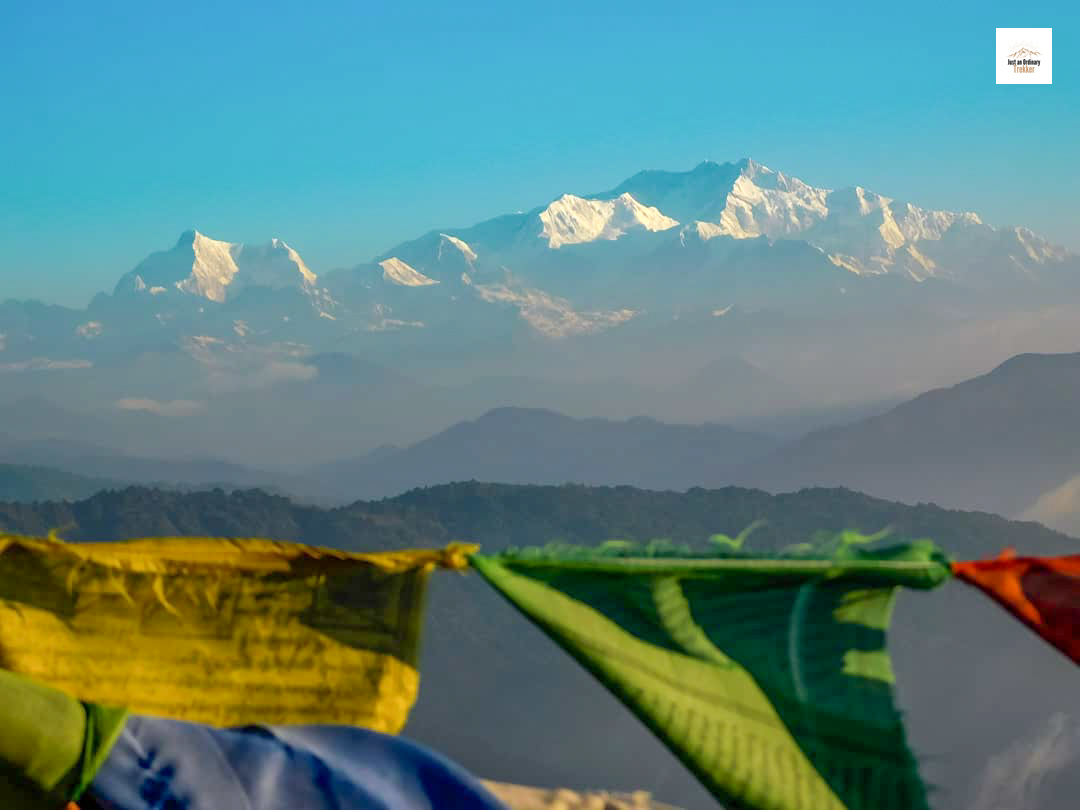
In a nutshell, the Sandakphu Trek is a 4–5 day hike through the Singalila National Park, running along the Indo–Nepal border. The trek is best known for its stunning views of Mount Kanchenjunga and the legendary Sleeping Buddha formation.
What makes Sandakphu special is that it offers world-class Himalayan views without demanding extreme fitness or technical skills—making it one of the most rewarding treks in Eastern India.
Where Is the Sandakphu Trek Located?
Sandakphu lies inside Singalila National Park, in the Darjeeling district of West Bengal. The trek usually starts from Manebhanjan or Chitre and ascends gradually to Sandakphu Peak, the highest point in West Bengal at 11,930 ft.
Best Time to Do the Sandakphu Trek
The best time to do the Sandakphu Trek is during:
- Spring (March–May)
- Autumn (September–November)
The trek is not recommended during the monsoon months (June–August) due to slippery trails, landslides, and poor visibility.
Why Spring and Autumn Are Ideal
Weather:
Both seasons offer mild and stable weather, with daytime temperatures ranging between 12°C and 20°C, making trekking comfortable.
Views:
Clear skies during these months means uninterrupted views of Kanchenjunga, Everest, Lhotse, and Makalu. A rare sight on Indian treks indeed.
Flora:
- Spring brings forests alive with blooming rhododendrons.
- Autumn paints the trail with golden alpine meadows and wildflowers like gentians and asters.
What Is the Cost of the Sandakphu Trek?
The cost of the Sandakphu Trek depends on your itinerary and trekking style:
- Basic 4-day trek: ₹10,000 – ₹12,000 per person
- Extended or guided teahouse trek: ₹15,000 – ₹20,000 per person
Teahouse stays make this trek more affordable compared to camping-based Himalayan treks.
Sandakphu Trek Itinerary Options
One of the biggest advantages of Sandakphu is its flexible itineraries. Below are some popular options:
4-Day Itinerary
- Day 1: Manebhanjan/Chitre → Tumling
- Day 2: Tumling → Kalapokhri
- Day 3: Kalapokhri → Sandakphu
- Day 4: Sandakphu → Srikhola
5-Day Itinerary (via Phalut)
- Day 1: Chitre → Tumling
- Day 2: Tumling → Kalapokhri
- Day 3: Kalapokhri → Sandakphu
- Day 4: Sandakphu → Phalut
- Day 5: Phalut → Srikhola / Manebhanjan
Different descent routes like Gurdum or Rimbik add variety and scenic diversity to the trek.
Permits Required for the Sandakphu Trek
You’ll need the following permits:
- Singalila National Park Permit
- Restricted Area Permit (RAP)
- Forest Department Permit
All permits can be obtained at the Forest Department office in Manebhanjan.
How to Reach the Sandakphu Trek Base Point
Manebhanjan and Chitre serve as the base points for the trek.
By Air
- Nearest airport: Bagdogra Airport (IXB)
- Distance to Manebhanjan: ~120 km (3–4 hours by road)
- Taxi cost: ₹3,000–4,000
By Train
- Nearest railhead: New Jalpaiguri (NJP)
- Distance to Manebhanjan: ~70 km (2–3 hours by road)
- Bus cost: ₹100–200
From Manebhanjan, you can either trek or take a jeep to Chitre (2 hours by road).
How Difficult Is the Sandakphu Trek?
Sandakphu is classified as an easy to moderate trek. The trail is well-marked and maintained, though there are a few steep sections.
The biggest challenge is altitude, as Sandakphu sits at 3,636 metres. Proper acclimatisation and hydration are essential.
Fitness Required for the Sandakphu Trek
Even though it’s an easy trek, basic fitness is important. You should be able to:
- Carry a 15–20 kg backpack comfortably
- Jog or brisk-walk 5 km without strain
Clothing and Layering for the Sandakphu Trek
Base Layer: Moisture-wicking thermal wear
Mid Layer: Fleece or light down jacket
Outer Layer: Waterproof and windproof jacket
Accessories: Woollen cap, gloves, buff, sunglasses
Footwear: Sturdy trekking boots with ankle support
Layering is crucial as weather conditions can change quickly in the Eastern Himalayas.
Essential Equipment for the Sandakphu Trek
- Trekking boots
- Trekking poles
- Comfortable backpack
Since Sandakphu is a teahouse trek, you don’t need tents or sleeping bags.
Final Thoughts
This guide covers the practical side of planning your Sandakphu Trek—but the soul of the journey lies in the experiences along the trail. To fully immerse yourself, pair this article with:
- My Sandakphu travelogue series (Bagdogra to Chitre, Chitre to Tumling, and the Sandakphu finale)
- 6 Reasons Why the Sandakphu Trek Deserves a Spot on Your Bucket List
Together, these posts will help you plan smarter, dream deeper, and walk into Sandakphu knowing exactly why it’s one of the most rewarding treks in India.
Sandakphu is the perfect blend of adventure, comfort, culture, and scenery. From witnessing the Sleeping Buddha at sunrise to sipping tea in a teahouse straddling two countries, this trek offers experiences that go far beyond just walking trails.
For deeper insights and real trekking moments, don’t forget to read my Sandakphu travelogue series and my detailed post on 6 reasons why Sandakphu Trek should be on your bucket list. Together, they’ll help you plan—and truly feel—the journey before you even lace up your boots.
Abhilash
Hi, I’m Abhilash, the voice behind Just an Ordinary Trekker. I’m not a professional mountaineer — just someone who discovered a deep passion for the mountains and the magic of the trail. What began as a weekend escape soon turned into a journey across some of India’s most beautiful trekking destinations — from the rugged Himalayan treks to the serene trails of Uttarakhand and Kashmir. Through Just an Ordinary Trekker, I share honest trekking guides, personal experiences, and inspiring travel stories that go beyond the itinerary. My goal is to help fellow trekkers — beginners and seasoned hikers alike — plan better, trek safer, and truly connect with nature. If you’re searching for authentic insights, practical tips, and a dose of mountain inspiration, you’ll feel right at home here. Welcome to Just an Ordinary Trekker — one of the few India trekking blogs that celebrates not just the summits, but the stories along the way.


You May Also Like
All You Need to Know About Deoria Tal & Tungnath-Chandrashila Trek
All You Need to Know About the Triund Trek!